The Short Run Production Outlook: Why 3D Printing Is Winning the Factory Floor
If you’re a mechanical engineer, you’ve spent the last decade hearing the same promise: “3D printing is going to revolutionize manufacturing.” For a long time, that felt like a bit of a stretch. Sure, it was great for making a visual prototype to show your boss or a fit-check model to see if a bracket actually cleared the motor housing. But for actual production? Most of us just defaulted to injection molding once the volume hit triple digits.
Welcome to 2026. The "prototyping only" label is officially dead.
At SICAM, we’ve watched the floor shift. This year, we’re seeing a massive migration toward additive manufacturing for short-run to mid-volume production (think anywhere from 1 to 1,000 units). The reason isn't just that the printers got faster: though they did: it’s that the entire economic and design philosophy of manufacturing has changed.
In this 2026 Outlook, we’re breaking down why 3D printing is no longer the alternative choice: it’s the primary strategy for the modern factory floor.
The Graduation: From "Part-Like" to "Production-Ready"
Five years ago, a 3D-printed part looked like a 3D-printed part. You had layer lines, porous surfaces, and structural weaknesses depending on how you oriented the build. If you wanted a "real" part, you went to molding.
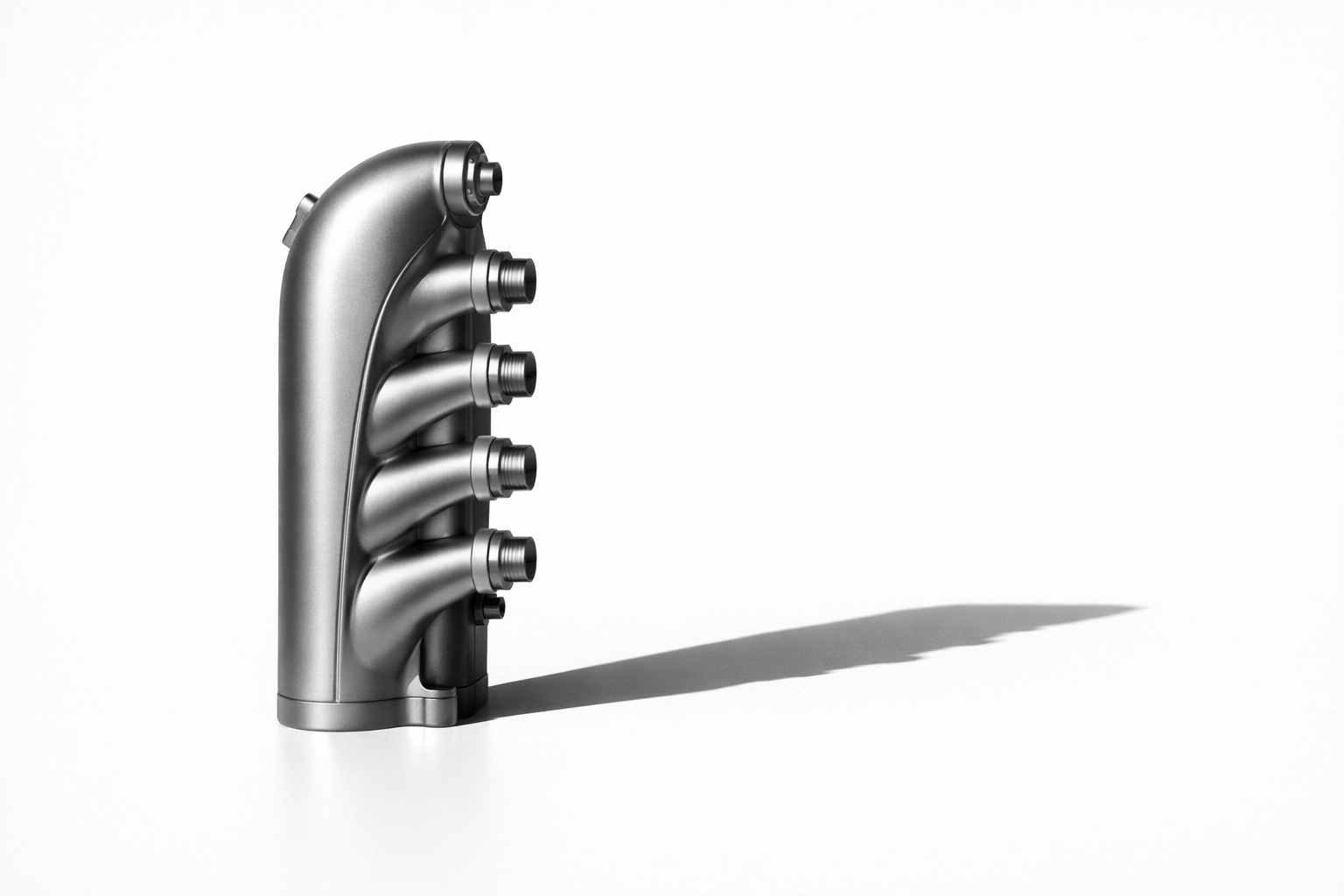
In 2026, that gap has closed. The materials we are running today at SICAM Additive Manufacturing are chemically and mechanically indistinguishable from their injection-molded counterparts. We aren't just making "prototypes" anymore; we’re making end-use housings, complex manifolds, and structural brackets that go straight into flight-certified assemblies or medical devices.
The shift happened because the industry stopped trying to make 3D printing do everything and started perfecting the technologies that handle volume.
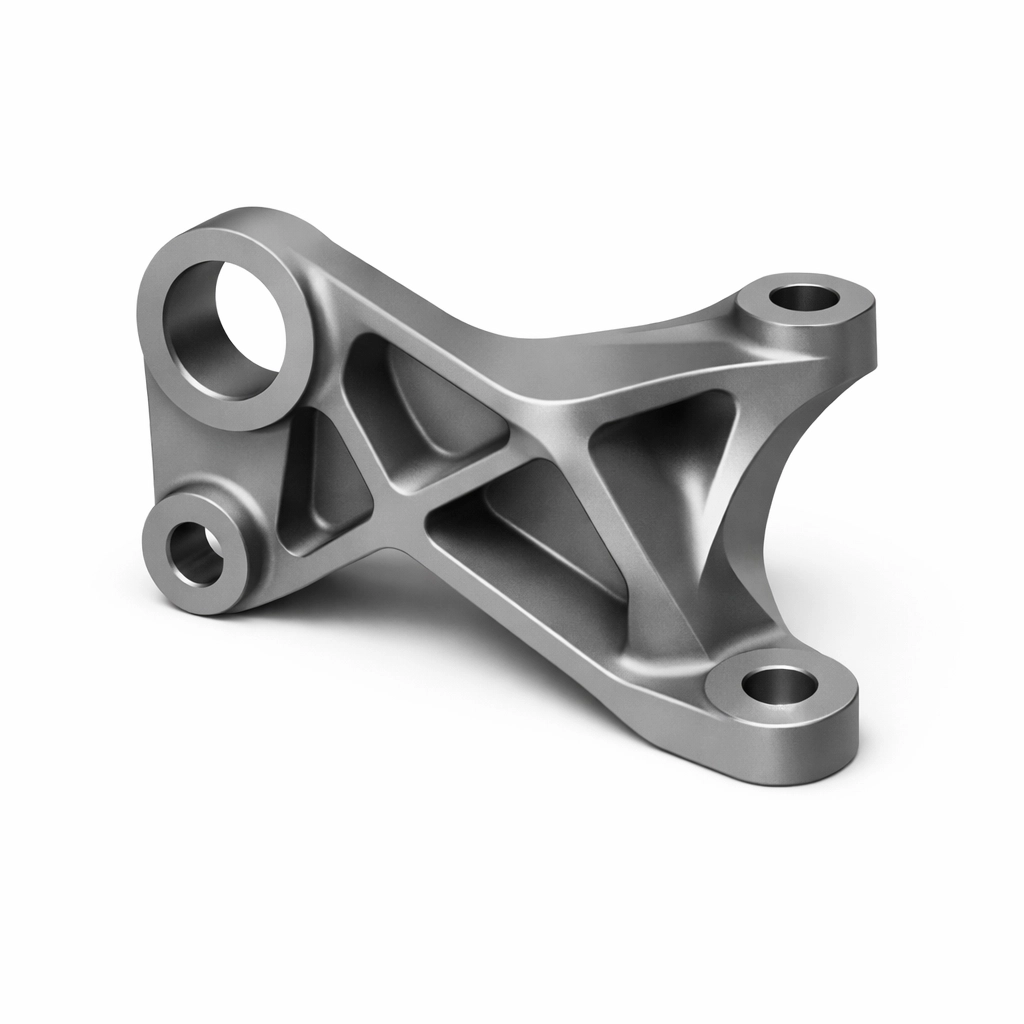
The Backbone: MJF and FFF Take the Lead
While there are dozens of additive technologies out there, two have become the workhorses of mid-volume production in 2026: Multi Jet Fusion (MJF) and high-end Fused Filament Fabrication (FFF).
Why MJF is the 2026 MVP
Multi Jet Fusion remains the king of mid-volume for one simple reason: isotropy. In the past, 3D prints were weak in the Z-axis. MJF changed the game by fusing layers so thoroughly that the parts have nearly equal strength in all directions.
For engineers, this means you don’t have to obsess over build orientation to ensure a clip doesn’t snap or a mounting point doesn’t shear. When you combine that with the ability to pack a build volume full of hundreds of different parts without needing support structures, the cost-per-part drops off a cliff. It’s the closest thing we have to a "digital injection mold."
The Rise of Industrial FFF
On the other side, FFF (or FDM) has moved out of the hobbyist realm. We’re now using high-temperature, carbon-fiber-reinforced filaments that can survive environments that would melt standard plastics. For large-format mid-volume parts: like ducting or custom jigs: FFF offers a speed and material versatility that keeps overhead incredibly low.
The Economic Reality: Killing the Tooling Risk
Let’s talk about the "T-word": Tooling.
In a traditional manufacturing setup, you’re looking at $10,000 to $50,000 (or much more) for an injection mold. That’s a massive upfront gamble. If your design needs a tweak in three months because of a field failure or a new sensor integration, that steel mold becomes a very expensive paperweight.
In 2026, the market moves too fast for that. Our customers are choosing SICAM Solutions because additive manufacturing eliminates the "tooling lock-in."
The 2026 Economic Advantages:
- Zero Upfront Capital: You pay for the parts, not the mold. This keeps your balance sheet lean and your investors happy.
- Iterative Production: You can print 500 units of "Version A," collect data, and print the next 500 units as "Version B" with a modified geometry. No penalties.
- Inventory on Demand: Why store 5,000 units in a dusty warehouse when you can print 200 every month as needed? The "Just-in-Time" dream is finally a reality thanks to the speed of modern MJF cycles.
Bridging the Design-to-Production Gap
One of the biggest hurdles we see engineers face isn't the technology itself: it's the transition. How do you take a CAD file and ensure it’s actually ready for a 1,000-unit run?
This is where SICAM's role has evolved. We’ve positioned ourselves as the "Tech-Forward Mentor." We don't just take your file and hit "print." We look at the "Design for Additive Manufacturing" (DfAM) principles.
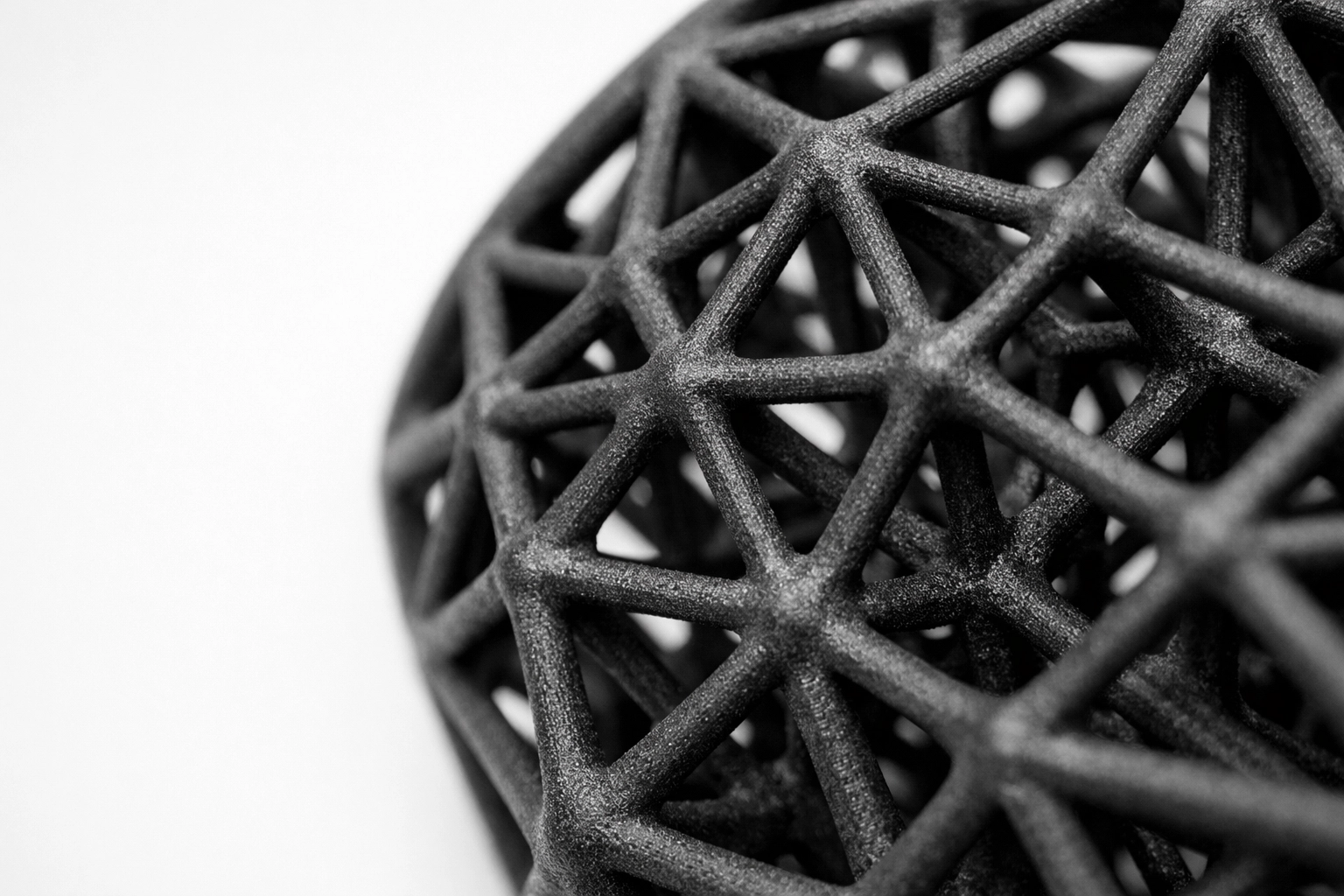
Can we consolidate three parts into one? Can we lattice a thick section to save material and reduce cost?
Our Resources and Toolkits are designed to help you think in additive terms. By the time your file hits our Online Quote system, we want to make sure it’s optimized for the best possible surface finish and mechanical integrity.
Supply Chain Resilience: The "Near-Shoring" Effect
If the last few years taught us anything, it’s that relying on a single mold in a factory 6,000 miles away is a recipe for a headache. In 2026, supply chain resilience is a competitive advantage.
By using mid-volume 3D printing, companies are bringing production closer to home. Since there's no specialized tooling required, a digital file can be sent to our facility and parts can be in your hands in days, not months. We’ve seen a 40% increase in "bridge production": where companies use SICAM to print parts while they wait for long-lead items or as a permanent solution to avoid international shipping risks.
Future Outlook: Speed and New Materials
What does the rest of 2026 and 2027 look like? We see two major trends accelerating:
1. Functional "Smart" Materials
We are moving beyond basic Nylon 12. We’re seeing an influx of flame-retardant materials (UL94-V0), ESD-safe plastics for electronics, and even biocompatible resins that are production-ready. The ability to print specialized parts for niche industries like aerospace and med-tech is becoming standard.
2. The AI Optimization Wave
We’re starting to use AI-driven nested builds to maximize every square inch of the printer's build volume. This isn't just cool tech; it directly lowers the cost-per-part for you. The smarter we get at packing a build, the more competitive our pricing becomes against traditional molding.
Why 3D Printing Wins in 2026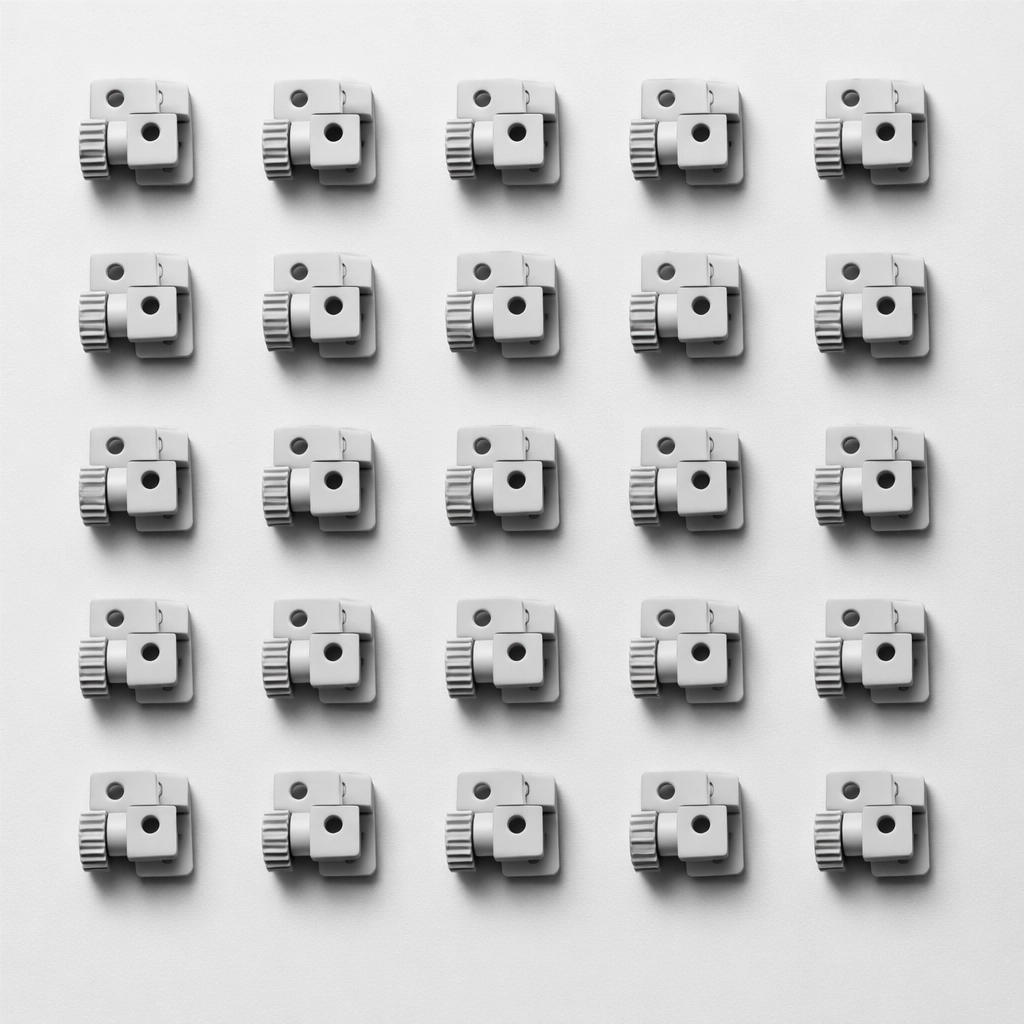
At the end of the day, 3D printing is winning because it grants engineers something that injection molding never could: Freedom.
Freedom from expensive molds, freedom from rigid designs, and freedom from supply chain bottlenecks. Whether you're working on a new EV charging component or a ruggedized industrial drone, the ability to scale from 1 to 1,000 without missing a beat is the new standard.
If you’re still sitting on the fence, wondering if your part is "ready" for production 3D printing, let’s talk. Our team is here to help you navigate the 2026 manufacturing landscape and find the sweet spot where additive meets your bottom line.
Ready to see how your project stacks up? Get an instant quote here and let's get your parts on the floor.
244